
Best VPN for Firestick: The Sofa Test Beats the Spec Sheet
- An Official App Buys You More Than Convenience
- The Remote Is Part of the Security Test
- The Tunnel Has to Survive Backstage
- A Working Stream Proves Only That It Worked Once
- The Nearest Useful Server Beats the Biggest Map
- Break the Connection Before the Movie Does
- Privacy Still Belongs to the Provider
- Travel Turns One Stick Into a Small Network Problem
- No Native App Moves the Test to the Router
- Keep the App That Passes From the Sofa
A VPN can look connected on your Fire TV and still vanish the moment you open a streaming app. The best Firestick VPN doesn't merely install. It stays in the route when the television starts doing the job you bought it for.
Sit on the sofa with the remote. Connect the VPN, leave its screen, open a streaming app, play a full program, and check the route again.
Before connecting, open an IP-check page in an available Fire TV browser and record the public address. Repeat the check after connecting and after playback; the VPN server's address should replace the home baseline and remain there. Our IP leak test guide explains what to compare.
That simple loop exposes the difference between a Fire TV logo on a sales page and an app built for a television.
An Official App Buys You More Than Convenience
Search the Amazon Appstore on the Fire TV and verify the developer before installing. An official listing gives the app a normal update path and avoids trusting an APK passed around by an unrelated download site.
Confirm support for your exact Fire TV model and Fire OS version. “Fire TV supported” may describe current sticks while an older generation lacks the memory, operating-system version, or app features the provider expects.
Sideloading is a developer installation method, not a magic compatibility layer. Amazon's Fire TV installation documentation describes using developer tools to install an app outside the Appstore. For an ordinary viewer, that also means taking responsibility for the file, future updates, and an interface that may never have been designed for a remote.
If the native app isn't there, pause before improvising. A router may be the cleaner route.
The Remote Is Part of the Security Test
Every control should be reachable from across the room. You need to see the selected country, connection state, protocol, and failure settings without pairing a mouse or guessing which invisible button has focus.
Login codes and QR activation can keep the main password off a television keyboard. Recent servers and a clear reconnect button matter more here than an elaborate map that takes 30 clicks to cross.
Try the recovery path too. Sign out, reset the app, and make sure you can sign back in without exposing the account password to everyone in the room. A television app that's impossible to manage will eventually be left in whatever state happens to work.
The Tunnel Has to Survive Backstage
Connect, press Home, and open the player. The VPN app has moved to the background, but its network service still has to carry the stream.
For covered traffic, the home router and internet provider should see a connection to the VPN server rather than the streaming destination. The VPN provider sits in that route, and the streaming service sees the server's public IP address. If the Fire TV drops the VPN and falls back, the router and ISP again see its direct service traffic, the VPN provider leaves the route, and the service may suddenly see the household's normal address.
Fire TV devices have limited resources, and the operating system manages apps as they move between active and background states. Test a full program, return home, open another app, let the device sleep, and restart it. Don't assume a connection survives because the VPN icon looked green before you left its screen.
Automatic launch and automatic connection aren't the same setting. One may open the app after startup without establishing the tunnel. Restart and watch what actually happens before another app sends traffic.
A Working Stream Proves Only That It Worked Once
Streaming platforms change IP blocklists, account checks, and location systems. A VPN provider can't guarantee that every server will remain accepted by every service.
Use the evaluation or refund period to test the exact Fire TV, account, service, and region involved. Play high-resolution video during the hours you normally watch. A five-minute trailer at noon doesn't reveal evening congestion, repeated buffering, or a server that fails halfway through a live event.
Keep rights and service terms separate from connectivity. A changed catalog proves the service saw a different route. It doesn't prove the viewing is permitted or that the VPN protected every other app.
For the broader selection tradeoffs, use the streaming VPN guide. On Fire TV, the last word still belongs to the sofa test.
The Nearest Useful Server Beats the Biggest Map
A giant country count sounds impressive on a television. Most evenings, you need a small number of uncongested servers close enough to keep delay and throughput under control.
Compare several nearby servers at the same time of day. Start with the VPN off to measure the internet connection and Wi-Fi, then repeat through each server. If the baseline already struggles, changing VPN protocols won't repair weak wireless coverage.
WireGuard and efficient provider protocols can perform well on limited hardware. OpenVPN may provide a useful fallback, but it can demand more processing from an older Fire TV or router. Treat protocol choice as a troubleshooting lever, not a trophy.
If the router carries the tunnel, its processor becomes part of the streaming test. A home model built to run WireGuard or OpenVPN can keep that work off the Fire TV while applying one policy across the network.

- Pairs Wi-Fi 6 and dual 2.5-gigabit ports with enough capacity for a device-heavy household
- Runs WireGuard and OpenVPN directly on the router so compatible devices can share one VPN policy
- Supports AdGuard Home and OpenWrt customization, with an initial firmware update recommended
The provider still needs current router instructions and downloadable profiles. Fast hardware can't repair an abandoned configuration guide.
Obfuscation belongs in the toolbox only when a network interferes with recognizable VPN traffic. It may add overhead. Automatic mode is helpful when the app tells you what it chose and lets you change course.
Break the Connection Before the Movie Does
A kill switch or VPN-only mode should stop covered traffic from falling back to the home address when the tunnel fails. The label isn't enough because implementations differ.
Start a harmless stream and interrupt the VPN by changing servers or briefly breaking its connection. Does playback stop, reconnect through the tunnel, or continue over the ordinary network? Check the public IP address rather than reading the spinner.
Split tunneling creates the opposite behavior deliberately. An excluded app uses the normal route while covered apps use the VPN. On the local network, that means two paths exist at once; at the destinations, one sees the VPN address and the other sees the household address. The VPN provider receives the covered app's traffic but not the excluded app's connection.
Keep the exception list short and record it. A connected badge can't tell you which app you chose to leave outside. See how split tunneling changes the observers before using it as a quick compatibility fix.
Privacy Still Belongs to the Provider
The Fire TV app reaches the same company and server network as the provider's phone or laptop apps. Read what happens to source and assigned IP addresses, timestamps, DNS requests, activity, device identifiers, diagnostics, analytics, and account information.
A television interface shouldn't become an excuse for more tracking. Check whether diagnostics are optional, how long necessary records remain, and whether the provider names third-party services that receive them.
The VPN also can't stop the streaming account from recognizing you. Your login, viewing history, device identifiers, and payment relationship remain. The tunnel changes the network route, not the account at its end.
Travel Turns One Stick Into a Small Network Problem
Bring a Fire TV Stick to a hotel and the Wi-Fi may require a browser login, isolate devices, or make repeated setup painful. A travel router can join that network once and create a private Wi-Fi network for the stick, phone, and laptop.
It can also run a compatible VPN profile for devices that lack a useful native app. The router doesn't grant streaming rights or guarantee access; it only gives your devices a route you control.
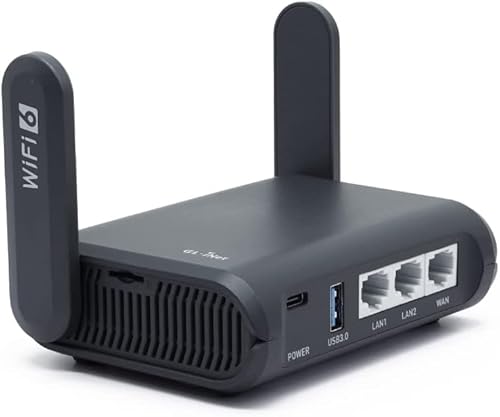
- Builds a private Wi-Fi 6 network for laptops, phones, streaming devices, and other travel gear
- Runs OpenVPN or WireGuard for compatible VPN services, with performance suited to faster connections
- Handles hotel captive portals and includes a configurable switch for VPN or network-wide filtering
Complete the hotel login and VPN setup on a phone or laptop before expecting the Fire TV to work. Keep a way to disable the router tunnel when a permitted service needs the ordinary local route.
No Native App Moves the Test to the Router
At home, a VPN-capable router can cover a Fire TV model with no supported app. Confirm that the router acts as a client for your VPN service, supports the required protocol, and has enough processing power for sustained video.
Policy routing lets the Fire TV use the tunnel while a printer, work laptop, or local streaming service keeps its ordinary route. Follow both sides after every change. One household switch is convenient only when you can still explain which device goes where.
A router also changes the failure point. The television may show normal Wi-Fi while the tunnel upstream has failed. Test from the Fire TV itself, not only from the router dashboard. Our router VPN setup guide walks through that boundary.
Keep the App That Passes From the Sofa
Install from the verified source. Connect with the remote. Leave the VPN screen, play a full program, put the Fire TV to sleep, restart it, and interrupt the tunnel on purpose.
Then check the route after every step.
The best Firestick VPN isn't the app with the longest feature page. It's the one that keeps its promises after you've pressed Home.