
VPN Protocols: The Fastest Name Isn't Always the Winner
- Start With the Job, Not the Acronym
- WireGuard Keeps the Rulebook Small
- A Router Makes Protocol Cost Visible
- OpenVPN Trades Simplicity for Reach
- IKEv2/IPsec Is Built for a Moving Edge
- A Wired Gateway Separates the Test
- Custom Protocols Need a Plain-English Reason
- PPTP, L2TP, and SSTP Aren't Equal Footnotes
- Test the Route That Fails, Too
- Travel Is Where Fallbacks Earn Their Space
- Keep the Winner That Survives Tuesday
Your phone leaves the coffee-shop Wi-Fi and joins 5G. One VPN reconnects before the map refreshes. Another hangs until you open the app. A third won't connect on the café network at all. Same provider. Same account. Three protocols taking three different routes through the problem.
A VPN protocol is the rulebook the app and server use to authenticate, encrypt, package, send, and recover your traffic. It can change speed, reconnection, compatibility, and what happens on a restrictive network.
It can't rewrite the provider's logging policy, repair a weak app, update stale software, or make a failed kill switch safe.
Start With the Job, Not the Acronym
Most people should start with the app's Automatic setting. A maintained app can choose a protocol that fits its own servers, operating-system permissions, and fallback logic better than a generic ranking can.
Then test the moment that matters.
If you stream and browse on an ordinary home connection, WireGuard is a sensible first manual choice. If a phone frequently moves between Wi-Fi and cellular, IKEv2/IPsec deserves a test. If a router needs manual profiles or a network blocks UDP, OpenVPN remains useful.
Compare four views under every protocol. Your device sees how quickly the tunnel starts, whether the route survives sleep, and whether apps keep working. The local network sees a particular transport, port, and packet pattern that it may pass, slow, or block. While covered traffic is connected, the VPN provider still carries the next hop and the destination still sees the provider's exit IP under WireGuard, OpenVPN, and IKEv2. A protocol can look excellent from one side and fail completely from another.

WireGuard Keeps the Rulebook Small
WireGuard uses a deliberately narrow set of modern cryptographic choices and runs over UDP. Its compact design leaves fewer knobs to tune, and current phones and computers often connect quickly with it.
That makes WireGuard a strong everyday default for browsing, calls, downloads, and streaming. It can also keep a session alive when the device's external address changes, provided the VPN app notices the network switch and maintains the operating-system route.
But the protocol doesn't decide how a consumer VPN links tunnel addresses and public keys to an account. The provider builds that surrounding system. Read its implementation notes instead of treating the WireGuard name as a privacy audit.
WireGuard's protocol description explains the cryptographic handshake and key-based routing. It doesn't certify the service wrapped around it.
A Router Makes Protocol Cost Visible
A laptop may run WireGuard without breaking a sweat. A small router has less processor headroom, so protocol choice can become the speed limit for every device behind it. Performance still depends on the device, VPN server, internet route, and surrounding network—not the protocol label alone.
Run the native VPN app on a wired computer. Record sustained throughput, latency, and loss. Then put the same task through the router tunnel to a comparable server. If the app stays quick while the router falls behind, the provider may be fine; the router is doing the choking.

- Pairs Wi-Fi 6 and dual 2.5-gigabit ports with enough capacity for a device-heavy household
- Runs WireGuard and OpenVPN directly on the router so compatible devices can share one VPN policy
- Supports AdGuard Home and OpenWrt customization, with an initial firmware update recommended
Flint 2 supports compatible WireGuard and OpenVPN client profiles, which makes it useful for this side-by-side test. Update its firmware first, keep the server and test destination steady, and don't confuse its advertised Wi-Fi rate with measured encrypted throughput.
OpenVPN Trades Simplicity for Reach
OpenVPN has years of deployment across computers, network appliances, and VPN-capable routers. It accepts far more configuration choices than WireGuard, which is valuable when you need an older platform, a portable profile, or a transport a difficult network will accept. That flexibility also creates more ways to configure it poorly.
OpenVPN can use UDP or TCP. Its own transport guidance recommends UDP for performance and TCP when compatibility requires it.
TCP isn't a free stealth switch. OpenVPN TCP on port 443 can resemble ordinary HTTPS at a basic level and clear a simple restriction, while deeper filtering can still recognize or disrupt VPN traffic. It can also create layers of retransmission when both the tunnel and the traffic inside it use TCP, producing ugly stalls on a lossy connection.
Use the provider's current app or configuration files. An old profile copied from a forum can preserve obsolete settings long after the service has moved on.
IKEv2/IPsec Is Built for a Moving Edge
IKEv2 negotiates the secure connection; IPsec protects the data that follows. With MOBIKE support, an implementation can update tunnel addresses as a device moves between networks instead of building the whole relationship again. RFC 4555 defines that mobility behavior.
That can make IKEv2 feel particularly clean on a phone moving from home Wi-Fi to cellular data. It doesn't guarantee a flawless handoff. The app, operating system, server, and kill-switch rules still have to agree about the new route.
IKEv2 also uses network paths that some restrictive firewalls block. A protocol that reconnects beautifully on mobile data is no help if the hotel network never lets it start.
Native operating-system support can be convenient when a provider app isn't available. It may also omit the app's server picker, automatic rules, split tunneling, or kill-switch controls. Test the whole connection, not just the successful login.
A Wired Gateway Separates the Test
When a television, console, or work appliance can't run the VPN app, a small wired gateway can carry its traffic without replacing the household router.
That separation is useful during protocol testing. Put one device behind the gateway, change only the protocol, and watch what happens to throughput and failure behavior. The rest of the home stays on its ordinary route.

- Sits on a wired network as a dedicated gateway for OpenVPN or WireGuard traffic
- Can run VPN client and server roles together for remote access and protected outbound browsing
- Has no Wi-Fi radio, making it best for pairing with an existing router or access point
Brume 2 has no Wi-Fi radio, so it fits a wired gateway job rather than a wireless travel-router job. Confirm the provider supplies a compatible profile and verify the protected device's public IP from the device itself.
Custom Protocols Need a Plain-English Reason
Providers give protocols names that promise speed, invisibility, or something vaguely futuristic. Some build on established designs. Others add a transport or obfuscation layer to handle blocking, reconnection, or performance.
Ask four questions: Is the design documented? Can independent specialists inspect meaningful parts of it? Which devices support it? What problem is it supposed to solve?
Open source can improve scrutiny. It can't prove the deployed server matches the published code, that updates are prompt, or that the surrounding account system keeps little data. A proprietary name isn't automatically dangerous either. The evidence sits in design, maintenance, audits, and observed behavior—not branding.
Keep a provider-specific default when it's documented, maintained, and reliable. Switch to an established option when you need a third-party client, a portable profile, or a router the custom protocol doesn't support.
PPTP, L2TP, and SSTP Aren't Equal Footnotes
PPTP is obsolete for protecting sensitive traffic because its security has long been broken. Finding it in an old router menu doesn't make it a reasonable fallback.
L2TP doesn't provide encryption by itself and is normally paired with IPsec. That combination can remain available on older equipment, but a maintained WireGuard, OpenVPN, or IKEv2 setup is generally easier to defend and troubleshoot today.
SSTP can cross networks that permit common secure-web traffic and still appears in Windows-centered environments. Most consumer users won't need it when a maintained app already offers stronger everyday choices.
The rule is simple: legacy compatibility is a constraint to manage, not a reason to lower the protection quietly.
Test the Route That Fails, Too
A speed test measures the connection while it works. Your privacy depends on what the device does when it doesn't.
Connect with the protocol you want to keep. Check the public IP, then run DNS and IPv6 checks. Interrupt the tunnel using a safe, provider-documented method while a harmless page reloads.
With fail-open behavior, the operating system returns traffic to the ordinary route: the local network and ISP can see destination IPs and any unencrypted DNS, the VPN provider stops carrying those requests, and the site sees that ordinary route's public IP. HTTPS or encrypted DNS still limits the contents each observer can read. With fail-closed behavior, covered traffic stalls until the tunnel returns.
Repeat after sleep and after a Wi-Fi-to-cellular change. A protocol that wins a download race but exposes traffic during every handoff hasn't won the job.
Use DNS leak testing as one part of that check. A strong protocol label can't rescue DNS queries the app routed outside the tunnel.
Travel Is Where Fallbacks Earn Their Space
Hotel and conference Wi-Fi often wants a captive-portal login before a VPN can connect. Complete the legitimate portal on the direct route, then start the tunnel and verify the public IP.
If the connection struggles, try another nearby server first. Then change the protocol. Use the provider's documented fallback or obfuscated mode last rather than changing five settings at once. OpenVPN TCP may help on a network that blocks ordinary UDP. Record what worked so the return trip doesn't begin with another guessing game.
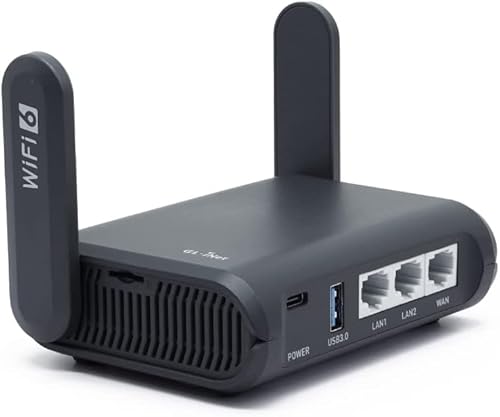
- Builds a private Wi-Fi 6 network for laptops, phones, streaming devices, and other travel gear
- Runs OpenVPN or WireGuard for compatible VPN services, with performance suited to faster connections
- Handles hotel captive portals and includes a configurable switch for VPN or network-wide filtering
Slate AX can place several travel devices behind one compatible router VPN. Learn its direct, portal, VPN, and failure states at home first. A router screen that says connected doesn't prove the phone or television took the intended route.
Keep the Winner That Survives Tuesday
Start with Automatic. Move to WireGuard when you want an efficient everyday baseline, IKEv2 when mobile handoffs are the problem, and OpenVPN when compatibility or transport flexibility earns the extra machinery.
Change one variable at a time. Keep the device, server region, test destination, and workload steady. Record connection time, sustained speed, latency, sleep recovery, network switching, and leak results.
The best protocol isn't the newest acronym or the fastest isolated run. It's the maintained option that starts on the network in front of you, carries the traffic you intended, and fails in a way you've already seen.