
BBC iPlayer VPN: A UK IP Isn't a UK Viewer
- A UK IP Address Changes What iPlayer Sees
- A Working Stream Still Isn't Permission
- Inside the UK, the VPN May Be the Problem
- Find the Tunnel Before Blaming the Television
- Split Tunneling Makes the Tradeoff Visible
- Test the Ordinary UK Route in Layers
- Abroad, Keep the VPN for the Job It Can Do
- The Tunnel Can't Carry Permission
A UK VPN server can make your connection look British by replacing your public IP address with its own. It can't move you to the UK, supply a TV Licence, or make overseas viewing permitted. The IP changes. The rules don't.
Open iPlayer from a hotel abroad. It refuses to play.
Connect to a London VPN server and try again. The error may remain. It may disappear. Neither result answers the question that matters: are you using the service where and how the BBC permits it?
A UK IP Address Changes What iPlayer Sees
Without a VPN, iPlayer sees the public IP assigned by the hotel or local internet provider. That address usually points to the country you're visiting. The hotel network and its internet provider see an ordinary HTTPS connection to the BBC. No VPN provider sits in the route.
Turn on a VPN and the route changes. The hotel network sees one encrypted connection to the VPN server. At that server, the VPN tunnel layer comes off and the connection continues to the BBC; HTTPS still protects the stream's contents. The VPN provider is now part of the route. iPlayer sees the server's UK public IP address.
Your physical location didn't move.
The BBC's rules didn't move either.
The BBC Terms of Use say not to stream or download iPlayer TV shows outside the UK. Separately, TV Licensing says you must be covered by a TV Licence to watch or download iPlayer—live, catch-up, or on demand, on any device.
A licence isn't an international access pass. A UK-looking IP isn't proof that you're in the UK.

A Working Stream Still Isn't Permission
BBC programs are licensed for particular territories. Those online rights don't automatically follow a UK viewer onto a beach, business trip, or family visit abroad.
That leaves two separate tests:
- Can the connection play the video? A technical question.
- Does the service permit this use? A terms-and-rights question.
A VPN may change the answer to the first. It doesn't get to rewrite the second.
Repeatedly jumping between UK servers doesn't make the use supported. It can trigger more location or security checks, and a random free proxy adds a new operator you haven't evaluated. The connection may be unencrypted, the address may already be blocked, and your account credentials still have to travel through the setup.
If the sales pitch stops at “BBC sees a UK IP,” it has stopped one question too early.
Inside the UK, the VPN May Be the Problem
Now move the same laptop to a home in Manchester.
Without the VPN, iPlayer sees the household's normal UK address. With the VPN, it sees the exit server. That server may be abroad, tagged as data-center infrastructure, shared by many users, or placed in the wrong country by an IP-location database.
The viewer is in the UK. The route looks suspicious or foreign.
If iPlayer says you're outside the UK, follow the BBC's location-error guidance: temporarily disconnect the VPN or proxy, fully close the app, and reopen it over the ordinary connection. If playback returns, you've found the cause. You don't need a longer server list.
Find the Tunnel Before Blaming the Television
The VPN may not be where you think it is.
On a phone or computer, check system settings for a VPN, proxy, configuration profile, relay, or custom DNS. A work VPN or security suite can change the route even when you never opened a consumer VPN app.
On a streaming box or smart TV, check the device itself and the router. A router policy can send the television through a tunnel while every phone in the room appears normal.
Don't disable work-managed settings you don't recognize. Find the owner of the route before pulling it apart.
For a UK home that regularly uses router-level VPN protection, device policy matters more than a giant on/off switch. Keep iPlayer on the normal UK route while permitted traffic continues through the VPN.

- Creates a dual-band Wi-Fi 6 network with gigabit wired connections for everyday home use
- Supports WireGuard, OpenVPN, and IPsec in client or server roles
- Adds WPA3, guest-network isolation, filtering controls, and OpenWrt options for deeper customization
Split Tunneling Makes the Tradeoff Visible
Split tunneling lets selected traffic bypass a VPN. For a viewer physically in the UK, that can stop a privacy tunnel from colliding with iPlayer.
Follow both routes.
Send iPlayer through the VPN and the local network sees an encrypted connection to the VPN server. The VPN provider sits in the route, and iPlayer sees the server's public IP address. Send iPlayer outside the tunnel and it sees the normal home IP. No VPN provider sits in that connection; the local network and internet provider see an ordinary connection to the BBC instead. HTTPS still protects the page and video contents in transit.
Same television. Different observers.
Keep the exception narrow. Test the iPlayer app and any helper processes because a platform may route more than the icon suggests. Then interrupt the VPN once: iPlayer should remain on the intended UK connection while protected apps either stay tunneled or stop according to their own failure rules.
Document the exception and remove it when you no longer need it. A forgotten bypass is still a bypass.
Test the Ordinary UK Route in Layers
First, confirm the device has ordinary internet access with no VPN, proxy, Smart DNS, or corporate route. Check its public IP location and time zone.
Next, close iPlayer completely, reconnect to the normal network, and reopen it. Old connections, cookies, DNS answers, and app caches can preserve an earlier location result after the route changes.
If the public address still appears outside the UK, restart the router. If no routing tool is active and the problem survives, contact the internet provider and BBC support with the IP address and exact error.
Change one layer at a time. Otherwise, a new DNS setting, a new server, and a reinstalled app can leave you with three fresh variables and the same blank screen.
Abroad, Keep the VPN for the Job It Can Do
iPlayer may be unavailable, but the hotel network is still the hotel network.
A VPN can encrypt traffic to its server and reduce what the local Wi-Fi operator sees. Use it for browsing, communication, and services that permit the connection. It still doesn't make you anonymous, fix weak passwords, or grant new distribution rights.
A travel router can put several devices behind one VPN profile. That saves repeated setup and makes the protected route easier to switch off when a service shouldn't use it. It doesn't make iPlayer viewing abroad permitted.
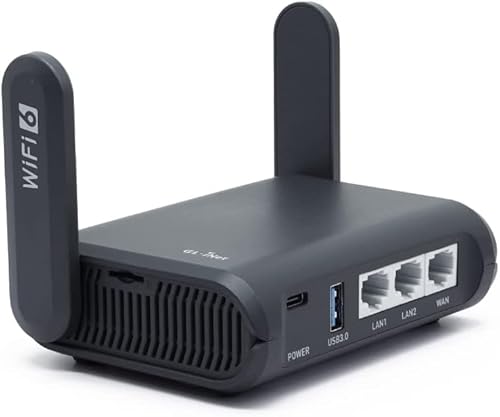
- Builds a private Wi-Fi 6 network for laptops, phones, streaming devices, and other travel gear
- Runs OpenVPN or WireGuard for compatible VPN services, with performance suited to faster connections
- Handles hotel captive portals and includes a configurable switch for VPN or network-wide filtering
For the program itself, look for an authorized broadcaster or streaming service in the country you're visiting. Program pages, production companies, and local television guides may identify one. The BBC's international website carries news and other supported content, but it isn't the iPlayer catalog; radio and podcast rights may differ again.
Don't assume a download changes the rule. The BBC's terms also tell viewers not to download iPlayer TV shows outside the UK.
The Tunnel Can't Carry Permission
Inside the UK, a VPN can be the reason legitimate iPlayer access fails. Disconnect it, or give iPlayer a narrow route around it, then test the normal connection layer by layer.
Outside the UK, a British-looking IP may change what the server sees. It doesn't change where you are, what the licence covers, or what the BBC permits.
A VPN can move traffic.
It can't move the boundary written around the service.