
Can a VPN Get Cheaper Flights? Prove the Price Difference
A cheaper flight after switching VPN countries looks like proof. It isn't. You changed the IP address while the airline's inventory, point of sale, currency, taxes, or seller may have changed too. A real saving has to survive checkout.
Ana searches New York to Lisbon from home and sees $620. She connects to Portugal, repeats the search, and sees €565.
The second number looks smaller, so the VPN gets the credit.
But what did she actually compare? The result may come from a different agency, exclude a bag, use another fare class, carry tighter refund rules, or add card conversion costs later.
One seat may also have left the cheapest inventory bucket between searches.
The screenshot proves that two pages displayed different numbers. It doesn't prove why.
A VPN Changes One Signal, Not the Shopper
On Ana's normal connection, the booking site sees her home public IP plus whatever her account, cookies, browser, language, and device reveal. Her internet provider sees the services she contacts and connection metadata, while HTTPS usually hides the search details and card information.
With the VPN on, the local provider sees an encrypted connection to the VPN server. The VPN provider sees Ana's source IP and connection metadata, and it may infer which services she contacts, but it can't read page or payment contents protected by HTTPS.
The booking site sees the VPN server's IP—but it may still see Ana's logged-in account, browser settings, selected currency, payment country, loyalty status, and earlier cookies.
Same passenger. One changed location clue.
A site can also ask for browser or phone location, infer a region from language and time zone, or learn the billing country at payment.
A VPN doesn't move a passport, credit card, phone number, or loyalty profile into Madrid because the exit server is there.
That doesn't make the IP irrelevant. Apparent country can affect currency, language, point of sale, the agency serving the offer, and access to regional promotions.
It just means a lower result needs a better explanation than “the VPN worked.”
Inventory Can Move While You Change Servers
Airlines don't sell every seat under one permanent price. They open and close fare classes with limited inventory and different rules. The International Air Transport Association's revenue-management overview describes inventory controls that open and close booking classes as demand and forecasts change.
That movement can happen while you disconnect, choose a VPN country, clear cookies, and search again. Search engines and travel agencies may also refresh cached offers at different moments.
A changed result can be genuine without being personal.
Imagine that Ana's $620 seat was the final one in its fare class. Another traveler buys it. Her Portuguese-IP search then returns the next class at €565, while currency conversion makes the headline look competitive. The timing and location changed together, so neither screenshot isolates the cause.
Tracking and personalized pricing are legitimate privacy questions. Treating every price movement as proof of profiling makes those questions harder to investigate, not easier.
Compare the Ticket, Not the Typeface
Choose one exact itinerary before touching the VPN. Keep the dates, passenger count, cabin, flight numbers, baggage, seat needs, and change or refund rules fixed.
If the site shows a fare-class code, record it.
Search the airline's own site first while logged out. Continue far enough to see the total before payment, but don't submit the purchase. Save the seller, currency, timestamp, fare family, included baggage, mandatory fees, and final amount.
Then repeat promptly through one VPN location. Don't change browsers, devices, travel dates, or passenger details during the pair. Changing five variables and getting a different number tells you nothing about which variable mattered.
Convert both totals with the same current exchange rate. Add the card's foreign-transaction fee, the seller's conversion spread, baggage, seats, and any agency service charge. A €10 headline saving can become a more expensive ticket before the payment button appears.
A foreign-currency refund may be converted at a different rate, and card-fee treatment varies.
The rules have to match too. A cheaper basic fare with no changes isn't the same product as a flexible fare. Nor is an unknown agency equivalent to buying from the airline when a cancellation leaves you chasing support.
For U.S. itineraries and sellers, the Department of Transportation explains which government taxes and mandatory carrier charges belong in an advertised fare on its ticket-buying guidance. Optional bags and seats can still change the trip total, so record what your specific fare includes.
One Win Can Still Be a Coincidence
Alternate the searches: normal connection, VPN, normal connection, VPN. Keep the pairs close together. If only the first result is cheaper, you may be watching inventory or a stale cache update rather than a repeatable location effect.
Write down the order and time. Compare the median final total, not the single lowest flash on the screen. If the VPN country repeatedly returns the same eligible ticket for less, you have a useful result—even if you still can't see which point-of-sale or distribution rule produced it.
Before paying, confirm that the selected country and fare are valid for your residence, payment method, and itinerary. A region-specific offer can disappear at checkout or create a support problem later. Don't enter a false billing address or misstate eligibility to preserve a discount.
If the difference survives all of that, take one final screenshot and decide whether the saving is worth the less familiar currency, seller, and support route. The cheapest valid total is the result. The most dramatic before-and-after screenshot isn't.
Private Browsing Doesn't Freeze the Fare
A private window isolates or discards local cookies for that session. It doesn't stop the airline's inventory from changing, force every agency feed to refresh together, or hide an account after you sign in.
Research has tested the familiar “cookies raise my flight price” claim with mixed methods and limited visibility into booking systems. One empirical airline-market study found the same fares for cookie-bearing and first-time browser profiles in its tests. That isn't proof that no seller ever personalizes anything. It is a reason not to treat cookies as the default explanation for every jump.
Use a private window as an experimental control, not a magic discount button. Test logged out and logged in deliberately because loyalty benefits may lower the price or add bags. A useful member rate is still useful even though the site knows who you are.
Better Savings Don't Need a Costume Change
Flexible dates, nearby airports, fare alerts, and a direct comparison between the airline and reputable agencies usually give you stronger levers than cycling through twelve VPN countries. Google Flights can track a route or specific flight and notify you when prices change significantly.
Compare nonstop and connecting routes, separate one-way tickets, and the real cost of a basic fare after bags and seats. Book when the itinerary, price, and rules work for you. There isn't a VPN server that can guarantee the cheapest day, recover a sold fare class, or make an inflexible ticket flexible.
Keep the VPN for the Job It Can Do
At a hotel or airport, a trustworthy VPN can reduce what the local network learns about your browsing and keep covered traffic inside an encrypted route to the VPN server. HTTPS already protects secure checkout contents in transit; the tunnel changes local visibility and the public IP.
If several travel devices need that route, a compatible travel router can create one network you control and run a supported VPN profile. Check the VPN provider's router support, update the router first, and test the hotel sign-in page before relying on it. The hardware improves network control. It doesn't negotiate an airfare.
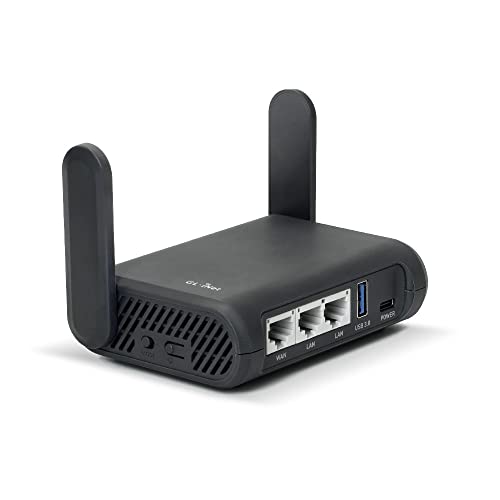
- Turns a wired or public wireless connection into a network shared by your own devices
- Includes WireGuard, OpenVPN, policy routing, and an optional VPN kill switch
- Runs OpenWrt and supports network storage, encrypted DNS, guest Wi-Fi, and AdGuard Home
Use a provider you trust before sending passport, account, and payment traffic through it. A “free flight trick” isn't a good reason to hand that position to an unknown proxy. See how to choose a travel VPN based on networks and devices rather than an imagined coupon.
A VPN may expose a real regional fare, seller, or currency difference. Most apparent wins need more work than switching countries and admiring the smaller number. Hold the itinerary still, compare the final eligible product, repeat the result, and count every fee. Then the VPN becomes what it should've been from the start: one test variable, not the explanation you decided on first.