
What a Free Unlimited VPN Is Really Promising
- Unlimited Answers Only One Meter
- The Bill Still Lands Somewhere
- The Plan Page Isn't the Privacy Policy
- Hidden Economics Can Enter the Traffic Path
- A Permission Prompt Is Evidence
- Make the Free Boundary Fail on Purpose
- No Cap Can Still Be the Wrong Fit
- Evidence Has a Date and a Scope
- The Best Limit Is the One You Can See
The upload is at 62 percent when the free VPN's “unlimited” badge starts to feel important. Then the app refuses the server you chose, the call stutters, and the badge remains technically true. There may be no data cap. That doesn't mean there are no limits.
The upload can still fail because a useful free plan can be unlimited in one dimension and sharply constrained in five others. The honest test is simple: name the resource with no ceiling, find who pays for it, and inspect what happens when every other boundary is reached.
Unlimited Answers Only One Meter
Start with the exact plan page, not the app-store headline. “Unlimited data” usually means the provider won't stop the tunnel after a fixed number of gigabytes. It may still limit devices, locations, server choice, connection time, queue priority, peer-to-peer traffic, or streaming support.
Those differences aren't theoretical. Proton currently says its free plan has no bandwidth or data limit, while its free-server documentation says the app initially chooses a fastest free server, later changes are random, and cooldowns apply. That is one provider's current design, not a promise about every free VPN.
Read the operating-system notes as well. Desktop and mobile tiers may expose different protocols or failure controls. “One device” can mean one simultaneous connection, not one installation. “No speed limit” can still meet a congested free server pool.
Translate every adjective into a testable sentence. If you can't finish “unlimited means…,” the marketing has kept the important noun offstage.
Check that sentence against the terms in the app you will actually install. Plan names can stay fixed while features and platform support move underneath them.

The Bill Still Lands Somewhere
Servers, transit, app development, security fixes, abuse handling, and support cost money every month. A free tier needs an observable operating model.
One credible model uses paying subscribers to support a smaller free service. Another uses donations or treats free access as a public-interest project. Advertising and partnerships can also fund an app, but then the data inputs, recipients, and targeting rules need closer inspection.
Zero dollars is only one price. Follow the network bill and ask what the operator receives instead. A plan can be free to install while charging in attention, device resources, or data.
Don't demand that every free service look identical. Demand that the exchange be legible.
The Plan Page Isn't the Privacy Policy
An absence of usage caps says nothing about an absence of logs. Open the policy and search for source IP, timestamp, DNS, browsing activity, device identifier, advertising ID, analytics, crash report, retention, affiliate, and partner.
Separate four streams: account data, website cookies, app telemetry, and tunnel or DNS records. A provider may minimize browsing logs while collecting device diagnostics. That can be a defensible choice, but “no logs” shouldn't force you to guess which stream the sentence covers.

- Connects everyday data collection to real choices about freedom, power, and control
- Explains why privacy matters even when you have nothing to hide
- Turns a broad social issue into practical questions you can apply to your digital life
Then trace the verbs. What does the company collect, link, retain, share, and delete? A list of data categories without purposes and recipients is only half a policy. A retention period of “as needed” should lead to the next question: needed for what, and who decides?
Look for text specific to free users. A policy centered on subscriptions may not explain free-app ads or analytics. If an independent audit is offered, check its date and scope; the report needs to cover the relevant app, servers, and logging claims, not merely the corporate website.
Hidden Economics Can Enter the Traffic Path
Advertising inside an app isn't the same as injecting ads into websites. The first still deserves a data explanation. The second alters traffic and creates a much more serious trust problem.
Watch for changed search providers, affiliate redirects, installed certificates, unexpected certificate warnings, or pages that look different only while the VPN is connected. Stop if the service asks you to weaken HTTPS trust.
Bandwidth sharing is another business model, and it isn't just an abstract privacy clause. Hola's own FAQ describes a peer network in which some free users contribute device resources and the company charges approved businesses for network access. The disclosure is precisely why you should check: “free VPN” can describe a very different exchange from a conventional provider-run server pool.
Don't let an app make your residential connection an exit point unless you deliberately understand and accept that role. Unlimited browsing for you doesn't mean unlimited risk should be assigned to your address.
A Permission Prompt Is Evidence
The system's permission to create a VPN connection is expected. Contacts, messages, call history, photos, microphone access, accessibility control, device administration, or precise location require separate feature-level explanations.
Google Play's current VpnService policy requires eligible apps to disclose sensitive data access and says VpnService can't be used to redirect or manipulate other apps' traffic for monetization. That's a platform rule, not proof that every listed app behaves perfectly. Read the developer's disclosure and the actual permission list.
Deny an unrelated permission and see whether the tunnel still works. Recheck after updates, because access can change long after installation. Confirm the store publisher, website operator, policy company, and support contact point to the same accountable entity.
Make the Free Boundary Fail on Purpose
Connect with low-risk traffic. Compare the public IP before and after, then test DNS and IPv6 handling. Lock and wake the device. Switch from Wi-Fi to cellular. Interrupt the VPN while a harmless page reloads.
Now press every plan limit you can reach safely. Change servers. Leave the connection idle. Run it during a crowded hour. Try the traffic type you actually need. When a boundary appears, the app should stop, disconnect clearly, or ask for a decision—not silently return traffic to the ordinary route.
Repeated dropouts are annoying. They become a privacy problem when traffic falls back to the ordinary route and exposes traffic you expected to protect. A working kill switch or operating-system block-without-VPN mode can prevent that fallback. Retest after major app and system updates; calm, stable sessions don't expose transition failures.
No Cap Can Still Be the Wrong Fit
Unlimited basic browsing on one device may be perfect for a student, traveler, or household member. It may be useless for a nightly video call if the free endpoints are distant or crowded.
Write the job before shopping: protect occasional airport browsing, keep a call stable, reach a required region, cover several devices, or move large backups. A reliable capped service can beat an unlimited plan that doesn't perform the task.
If a router setup is part of the plan, confirm that the free tier supplies compatible configuration profiles and permits that use. Many app-only plans don't. Never buy hardware on the assumption that an “unlimited” phone account can be transferred to it.
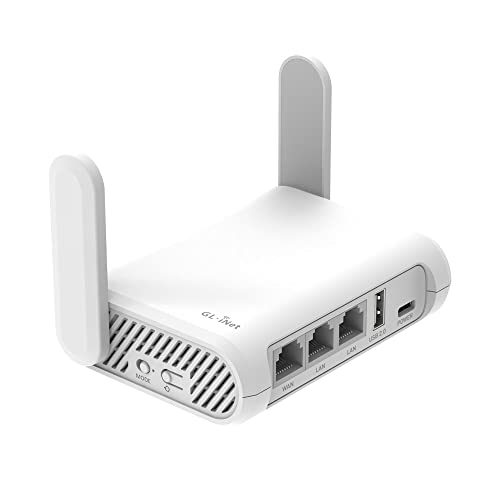
- Creates your own dual-band network from a hotel, café, Ethernet, or public Wi-Fi connection
- Includes OpenVPN and WireGuard support for compatible VPN subscriptions
- Lets you assign the side switch to VPN control after configuring it in the admin panel
GL.iNet Opal can cover several devices behind one travel network, but only if the free tier supplies compatible OpenVPN or WireGuard profiles and permits router use. The router can extend a supported plan; it can't turn an app-only account into one.
Evidence Has a Date and a Scope
Open-source apps let specialists inspect client code, but they don't reveal every server-side practice. An audit can test a logging claim, but only for the systems and period named in the report. A privacy badge without the report, auditor, scope, and date is decoration.
Check update history and supported operating systems. An abandoned app can leak through neglect even if nobody designed it to collect data. Look for named protocols, clear DNS and IPv6 behavior, a maintained support channel, and candid incident responses.
Popularity proves that people installed an app. It doesn't prove who operates the servers or what happens during failure.
The Best Limit Is the One You Can See
Before using an unfamiliar service for work files, banking, or private messages, keep the first test deliberately boring. Use HTTPS and low-risk sites, and don't sign in, while you verify ownership, policy, permissions, routing, and failure behavior. HTTPS protects page contents in transit, but the VPN can still observe connection metadata and influence routing.
A trustworthy free unlimited VPN can exist. Its funding is understandable, its remaining limits are explicit, its data practices are narrow, and its tunnel fails safely. If the operator can't explain how the network is paid for, “unlimited” is the least useful fact on the page.