
The Best VPN for Netflix Needs an Exit Plan
A VPN can stream Netflix flawlessly on Friday and look like a proxy on Saturday. That doesn't always mean the tunnel failed. It means streaming access and VPN quality are two different tests.
Sit down with the exact television, account, and network you plan to use. You tap a familiar title, the spinner turns, and Netflix either plays it, changes the catalog, or asks you to turn off a VPN. A badge on a provider's comparison page can't reproduce that scene.
Netflix says a VPN may limit viewing to titles it licenses worldwide. Its current VPN help page also says VPNs aren't supported for live events or an ad-supported experience. Those rules can change, so check Netflix directly and use the service within the terms that apply to the account.
The useful question isn't “Which VPN always unblocks Netflix?” No provider controls Netflix's address classifications, apps, licenses, or future rules. Ask which service makes an uncertain result easy to test, diagnose, and reverse.
Test the Screen in Front of You
List the devices that actually play video: smart TV, streaming box, tablet, phone, and computer. A beautiful desktop client doesn't help a television that can't install it.
Check the device's current app store and the provider's current setup guide. Native support should mean a maintained app for that platform, not a television logo beside instructions for changing DNS somewhere else.
Use the provider's evaluation period on this exact account, device, and viewing location. A huge server total matters less than useful nearby locations and a server picker you can operate comfortably from the television remote.
Then run one controlled test. Start without the VPN and note the title, picture quality, and startup time. Connect to a nearby VPN server, fully close and reopen Netflix, and play the same title long enough to move through several scenes. Seek, turn on subtitles, and restart once.
From the television's side, both routes should feel ordinary. From the home network's side, the direct route goes toward Netflix's infrastructure while the VPN route first goes through an encrypted tunnel. The VPN provider becomes the intermediary; Netflix sees the VPN server's address instead of the home's.
That observer-by-observer change is the product. A different catalog is only one possible consequence.

A Router Solves Installation, Then Creates a Bigger Switch
When a TV can't run the provider's app, a compatible router can carry its traffic. That covers consoles, TVs, and streaming sticks without installing a client on each one.
It also moves the control panel away from the remote. If the whole household shares one VPN route, a server problem can interrupt every screen, bank app, game, and work call at once. Policy-based routing—sending only selected devices or destinations through the tunnel—keeps the blast radius smaller.
Choose hardware that acts as a VPN client, not merely a VPN server or “passthrough” device. Those features solve different jobs. Confirm the exact model, firmware, supported protocol, and tested encrypted throughput before buying around a headline wireless speed.

- Pairs Wi-Fi 6 and dual 2.5-gigabit ports with enough capacity for a device-heavy household
- Runs WireGuard and OpenVPN directly on the router so compatible devices can share one VPN policy
- Supports AdGuard Home and OpenWrt customization, with an initial firmware update recommended
Give the TV a stable local address or reservation so the routing rule doesn't drift to another device. Keep a named direct network or documented bypass ready. Recovery should take one clear action, not a family meeting around the router console.
One Full Episode Beats Ten Speed Tests
A speed test samples capacity for a moment. Streaming needs sustained delivery through the whole path.
Use a nearby server at the hour you normally watch. Look for startup delay, buffering, resolution drops, audio drift, and subtitle timing. Compare the same program without the VPN, because crowded Wi-Fi, household uploads, and Netflix's delivery network can affect both routes.
WireGuard is designed for a small, efficient implementation and high performance, while OpenVPN may offer compatibility on hardware or networks that handle the default poorly. The WireGuard project describes the protocol's goals, but your router, provider implementation, distance, and congestion decide the result in the living room.
Change one variable at a time: nearby server first, then protocol. If the native laptop app is fast on the same service but the router is slow, the router's processor or configuration may be the bottleneck.
Automatic protocol selection is useful when the app still tells you enough to troubleshoot the route.
A Proxy Error Is a Diagnosis, Not a Slot Machine
First confirm that ordinary sites work through the VPN. If they don't, fix the tunnel before touching Netflix.
If they do, try another server the provider currently recommends for your location, close Netflix completely, reconnect, and reopen it. Check the apparent country with Netflix's own fast.com instructions. Avoid changing server, protocol, DNS, account region, and device settings in the same attempt; a successful result won't tell you what fixed it.
If stale state is the likely culprit, clear only the Netflix app cache or site data needed for the test. Don't erase every device setting and create a second problem while diagnosing the first.
If the warning remains, ask support a precise question: does the service currently support this account experience, region, and device? “Try more servers” isn't the same as a supported setup.
A travel router can be useful when several devices need one repeatable network in a rental or hotel. It also adds another captive portal and another control surface, so practice the direct fallback before movie night.
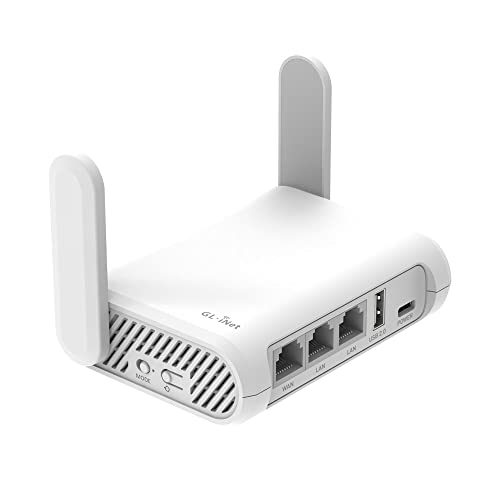
- Creates your own dual-band network from a hotel, café, Ethernet, or public Wi-Fi connection
- Includes OpenVPN and WireGuard support for compatible VPN subscriptions
- Lets you assign the side switch to VPN control after configuring it in the admin panel
Once every screen joins that private network, test the direct exit as deliberately as the VPN route. The setup isn't recoverable if bypassing one blocked server means factory-resetting the box.
Smart DNS Changes Less—and Protects Less
Smart DNS may help a compatible television reach location-sensitive services by changing how selected name lookups are handled. It isn't a full-device encrypted tunnel and doesn't promise a different public IP for every request.
Follow the same scene through both tools. With Smart DNS, the TV still sends most traffic on its ordinary internet route; the ISP retains that direct network view, the DNS operator handles the selected lookups, and Netflix receives the resulting connections. With a router VPN, the home network first sends the TV's covered traffic through an encrypted connection to the VPN server; the VPN operator then forwards it, and Netflix sees that server's route.
Neither option makes the Netflix account anonymous. Netflix still has the login, viewing activity, device information, and other account signals it normally receives.
Use Smart DNS when that narrow function is enough. Use a VPN when the encrypted route and wider device coverage matter. Don't call them equivalent because both may affect what a TV can reach.
Keep the VPN Only If It Survives a Netflix “No”
Streaming success says nothing about logging. Read what the VPN keeps about source addresses, timestamps, DNS, device identifiers, diagnostics, and account activity—and how long it retains each category. Run IP, DNS, and IPv6 checks on a browser-capable device using the same route.
Test failure too. If the tunnel drops, a kill switch may interrupt playback instead of falling back to the home's public IP. That's the honest trade: privacy-sensitive routing can stop the show.
The best Netflix setup has three exits you understand: switch servers, bypass the VPN for the television, or return the network to its direct route. It doesn't require a permanent promise from either company.
Keep the service if it plays reliably on your real screen and still earns its fee as a privacy tool when Netflix refuses the route. A VPN that only matters while one shared address works isn't a dependable streaming plan. It's a temporary coincidence.