
The Best Cheap VPN Survives the Second Price Tag
The cheapest VPN price is often a division problem dressed as a monthly bill. The banner shows a tiny number. The checkout page asks for years of money today.
You're shopping on a phone before a trip. One plan shouts $2 a month, adds “free” months, and starts a countdown. Tap through and the real offer appears: one large upfront charge, an introductory term, then a different renewal.
That VPN may still be good value. But the banner hasn't given you the price you need to compare.
Make the Small Number Admit What It Means
Write down four facts before opening another provider tab:
- Due today: the exact charge that will leave your account now.
- Initial term: the paid months plus any bonus months.
- Renewal: the next charge, billing interval, and date.
- Exit: the refund deadline, eligibility rules—including payment-method exclusions—and cancellation route.
Now calculate two useful numbers. Divide today's charge by the entire first term for the introductory monthly equivalent. Then divide the stated renewal charge by its term. Keep those figures separate.
A long introductory term can make the first average look excellent while demanding more cash than your budget allows today. A monthly plan can look expensive yet cost less for a six-week trip because you aren't buying unused years.
The FTC's auto-renewal guidance recommends checking what happens after a promotional period, how much the next charge will be, and how to cancel. Save the terms and confirmation page; sales copy can change after you subscribe.
A resetting countdown or disappearing discount creates urgency, not evidence. If checkout won't show the full charge and renewal in plain language, close it.
Cheap Is the Tiebreaker, Not the Safety Standard
Set a minimum before price starts making excuses.
The provider should identify its operator, explain what data it collects and retains, maintain apps for every platform you use, and offer a failure control that fits those apps. Look for established protocol options such as WireGuard or OpenVPN without treating the protocol name as a trust certificate.
Read “no logs” as the start of a sentence. Does it cover browsing activity, DNS requests, source IP addresses, assigned addresses, connection times, bandwidth totals, device identifiers, and app analytics? What remains, for how long, and under which company?
An independent audit can support a narrow claim. Check its date, systems, and version. It cannot promise that later software, servers, or policies stayed unchanged.
Maintenance matters because the VPN app and server are part of the protection. The UK's NCSC VPN guidance warns that third-party clients add software that must be kept current and can have poor operating-system integration. Check for recent app updates, help pages that match the current software, and security issues the company acknowledges rather than buries. An enormous server count doesn't compensate for abandoned apps.
A VPN Won't Cover the Security Work Beside It
The bargain tunnel can encrypt traffic to its server and replace the public IP address websites see. It can't remove malware, stop a signed-in site from recognizing you, make a reused password safe, or turn a phishing page honest.
Keep those jobs in the budget. Use maintained device protection, unique passwords, software updates, and multifactor authentication where available. Paying less for the VPN is sensible if it leaves room for protections that solve different problems.

- Focuses on FIDO-based passkeys and account authentication without the extra protocols in the YubiKey 5 line
- Uses USB-A on computers and NFC on compatible mobile devices
- Provides a durable, battery-free second factor for supported personal accounts
For any additional account-security tool, check which services and devices support it, then keep a backup or recovery method. That work doesn't upgrade the VPN; it addresses a separate risk.
Buy for the Route You Actually Take
List the devices, operating systems, and locations you genuinely need. Then inspect the feature page for each specific app. A kill switch on Windows doesn't prove one exists on iPhone, Linux, or a television.
If streaming matters, test the exact services during the refund period. Access changes as services and VPN networks change, so a reviewer's old success isn't a warranty. If peer-to-peer traffic matters, confirm the provider permits it on the servers and apps you will use.
Count simultaneous connections, but don't buy a giant number for its own sake. Five reliable slots can beat “unlimited” if your household uses four devices.
Free may be enough for light use on one device when the operator and funding model are clear. A paid plan becomes easier to justify when you need regular support, more locations, fewer caps, or several connections. Apply the same safety test either way; a free VPN is not safe or unsafe merely because it is free.
Make the Refund Window Do Some Work
Install the VPN as soon as the refund clock starts. Don't spend most of the window admiring the account page.
At home, compare the public IP and DNS servers before and after connecting. If the provider claims IPv6 protection, test that route too. Then close and wake the device, change servers, switch between Wi-Fi and mobile data, and interrupt the tunnel while a harmless page reloads.
A kill switch should block covered traffic rather than let it slip back to the normal route. “Reconnected” tells you how the test ended, not what happened during the gap.
Try the work that matters: calls, downloads, games, banking, and the distant locations you bought. Test at more than one time of day. Speed changes with server load, distance, network route, device, and protocol, so one impressive result isn't a verdict.
Notice friction. Does the app reconnect after sleep? Are local printers reachable only when expected? Do split-tunneling rules cover the apps you selected? Can you find support and cancellation without a scavenger hunt?
If router support was part of the bargain, ask the provider for configuration files and a list of supported hardware. During the refund window, confirm that the devices you select actually follow the tunnel and decide what they should do if it fails. Treat the hardware and VPN subscription as separate purchases unless the offer clearly says otherwise.
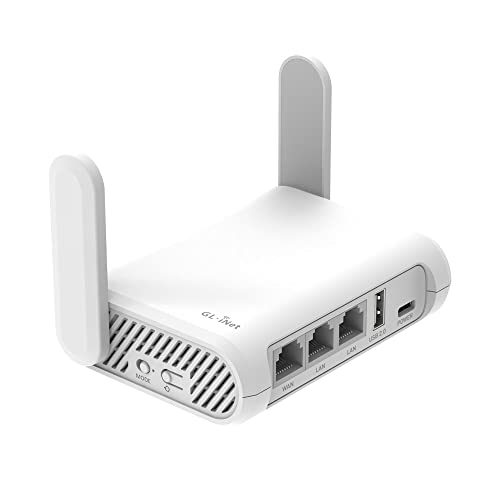
- Creates your own dual-band network from a hotel, café, Ethernet, or public Wi-Fi connection
- Includes OpenVPN and WireGuard support for compatible VPN subscriptions
- Lets you assign the side switch to VPN control after configuring it in the admin panel
If it fails a must-have test, cancel while the evidence and deadline are in front of you. Keep the confirmation.
The Best Cheap VPN Survives Two Price Tags
Compare only the services that cleared your privacy, platform, and failure tests. For each finalist, answer:
- Can I afford the charge today without pretending it is monthly?
- Can I accept the stated renewal if I forget to shop again?
- Did the actual apps protect my route and handle a broken tunnel?
The cheapest advertised VPN may lose on all three. A slightly higher first-term average can be the better bargain if the billing is clear, the tools work, and you won't need to replace it mid-trip.
Price is what the page prints. Cost is the cash, commitment, limits, and risk you take home.
Buy the second number.